
Why Does Airplane Food Taste Different on Every Flight?

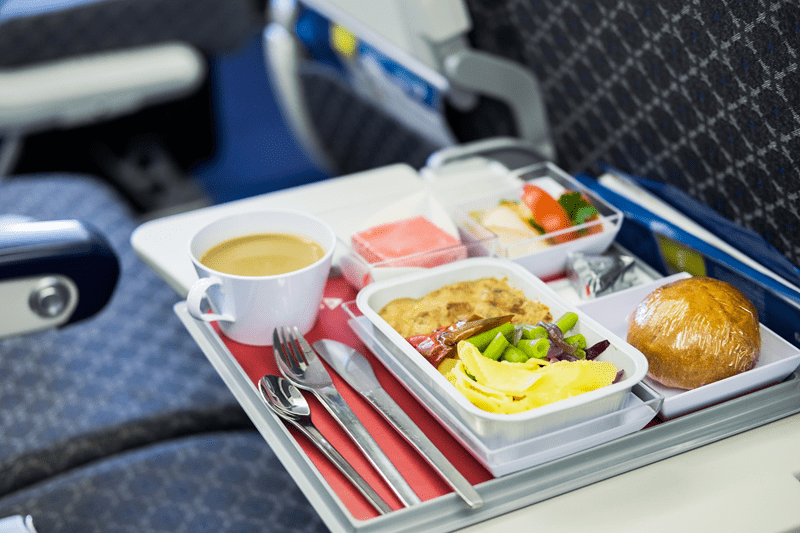
Have you ever flown on an airplane and taken a bite out of an airline meal, only to discover that it doesn't taste perfect? If so, you are not alone. Research has shown that when we eat food at high altitudes, our bodies do not process its taste the same way they do at lower altitudes. Factors such as cabin pressure and environment also contribute to a decline in the quality of the food we eat. Because of this, airlines have invested heavily to upgrade their in-flight dining offerings. However, making aircraft food as good as possible, given the aforementioned constraints, remains a challenge. Let's take a look at what happens to food's taste at high altitudes and how the airline industry is responding.
Why Does Airplane Food Taste Different Than Food on the Ground?
Airplane food tends to lose its flavor as soon as it reaches cruising altitude. The reason is the cabin environment and how your body will react to it. Most airplanes are designed with cabin pressure equivalent to about 6,000-8,000 ft of altitude. When you get on a plane, and the aircraft climbs to 35,000 ft, the change in pressure affects the tongue's taste buds, reducing the perception of sweetness and saltiness by approximately 30%. Airplane food, therefore, is typically much less flavorful than food consumed on the ground.
To compensate for the loss of taste experienced by passengers at high altitude, many airlines add more sodium to their meals and use more pungent spices in their food preparation. They are attempting to make food taste better, not necessarily to exaggerate the flavors in airplane food.
You Might Like This: Why Airplane Food Tastes Weird in 2025: Science & Solutions
How Do Altitude Effects Impact Taste Buds and Smell?
The impact of altitude on your body goes beyond how it affects your hearing; it also affects how you breathe and how you eat. One significant aspect of how we eat is through our sense of smell. As your nose loses moisture in the dry environment of an airplane cabin, you are less able to detect smells, and when this happens, it is complicated to recognize the flavors you are tasting.
The loss of smell leads to a loss of taste, which is why tomato juice has remained one of the most popular beverages served on airplanes. The umami profile of tomatoes allows them to enhance flavor perception in the air, even though they may taste bland when consumed on the ground. To summarize, the taste of airline food is more affected by the conditions in which airline food is consumed than by poor preparation of airline food.
Related Resource: Antwerp in 2 Days: Top Attractions, Food & Culture in 2025!
What Role Does Food Science Play in Airline Meals?
A team of culinary experts and food scientists supports every tray of food that is served in the air. Food science is critical to the preparation, storage, reheating, and serving of airline meals.
Airline meals are cooked at the airport and quickly cooled to prevent bacteria from spoiling the meal before it is served. When you eat airline meals, they are reheated on the plane with either convection ovens or steam ovens. During reheating, the texture, moisture, and aroma of the food change; these are three significant aspects of the food's overall quality and taste.
The chef developed techniques that use food science to enhance the taste of the food, even given the inherent limitations of preparing and cooking airline meals. Some examples include:
- Enhancing umami flavor
- Using herbs in place of salt
- Adjusting the acidity of food
Ultimately, these techniques enable chefs to produce better-quality airline meals than would typically be possible given the limitations of the cooking process.
Is In-Flight Dining Designed Differently Than Restaurant Dining?
In-Flight Dining is unique for several reasons, including the specific characteristics of in-flight meals that differ from those of restaurant-style meals. In-flight meals must:
- Taste Good After Being Reheated
- Be Safe to Eat After Being Stored For a Long Time
- Have a Wide Range of Appeal
- Retain Their Texture While at High Altitude
Airline meals are typically bolder in flavor than ground-level meals because people perceive flavors differently on board an airplane; therefore, they tend to have more aroma than the typical bland meal served in restaurants.
Because of this, airline meal service usually features heavy entrees (braised), curry dishes, and pasta dishes, which do not lose as much flavor or texture during flight as grilled items do.
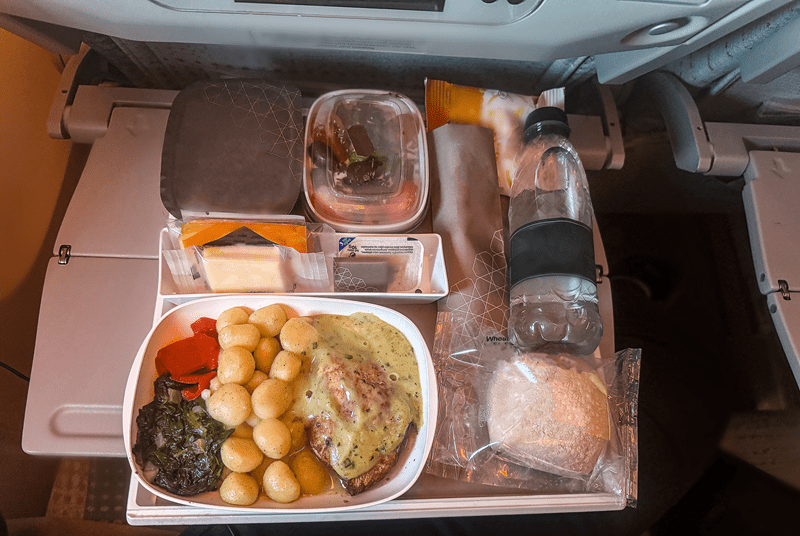
Why Are Airline Meals Often High in Sodium?
Saltiness is one of the major grievances about airline meals, but there is an explanation for why they are so salty.
At altitude, the body's ability to taste is reduced. Therefore, increasing the amount of sodium in airline meals enables passengers to taste flavours. Without this added salt, airline meals would have extremely little taste for most passengers.
However, with increased health consciousness, airlines are beginning to use other flavours
to balance with excessive rates of sodium by:
- Using Herbs, Spices, And Other Flavours Instead Of Sodium
- Using Fermented Items
- Using Natural Umami Enhancements
Modern Airplanes Are Continuing To Evolve To Meet The Taste And Wellness Expectations Of Today.
How Do Taste Buds Change During a Flight?
Environmental factors impact taste bud sensitivity. Many factors will impact taste buds while flying, such as lower cabin humidity, reduced cabin oxygen levels, and background noise.
Research shows that constant engine noise can affect one's sense of sweetness, so desserts taste less sweet at high altitude, and more food tastes more savory. Understanding how your taste buds react at altitude can go a long way towards explaining why there is a dramatic difference between how airplane meals taste when compared with the same recipe on the ground.
Why Does Tomato Juice Taste Better as Airplane Food?
Tomato juice has become an iconic beverage we consume on airplanes, and science confirms this is due to its high Umami content. This high Umami content makes the juice feel more enjoyable at high altitudes.
Unlike other popular beverages (e.g., soda) that depend on a sweetener for their flavor, tomato juice won’t have that loss of sweetness around 5,000 feet above sea level; therefore, it will still be good at high altitudes.
The above illustrates how airline menu planning is affected by both the science of food and the way foods adapt to our tastes at high altitudes.
Are Airlines Improving Airplane Food in 2025 and Beyond?
Absolutely, in a huge way. The airlines have now come to realize that what they serve as airplane food is part of the overall experience of their passengers. To enhance the meals served on their planes, premium carriers are now partnering with celebrity chefs and spending time and money on sensory research.
Some of the advancements made in airline meals are:
- Menus that focus on regional elements
- Fresh ingredients
- Online reheat technologies
- Healthy meal options.
The impact on food has not been removed at altitude, but with more innovative food science, the airline industry can produce the best-tasting airplane food.
How Can Passengers Enjoy Airplane Food More?
You can enhance your in-flight dining experience by:
- Staying well-hydrated, which helps to maintain healthy taste buds
- Opting for savoury items rather than sweet items
- Restricting the consumption of alcohol, which also affects your eyes and dulls your palate
- Choosing meals that include sauces/spices
Understanding how food is prepared on an aircraft will help you select better meal choices and set your expectations accordingly.
The Future of Airplane Food: What’s Next?
Airline food may be all about personalization in the future. Airline companies are looking into customized seasoning levels, menu planning driven by AI, and improving cabin humidity to help preserve taste (as much as possible) so passengers don't think their food is bland.
As technology continues to modernize, the distance between being on the ground and flying will lessen. Even though altitude will be felt much less than in the past, airport systems, as well as more innovative designs and a deeper understanding of food science, will more accurately define airline meals than ever before.
Conclusion
The scientific, biological, and altitude influences in airplane food aren’t just random occurrences; they’re scientifically based through food science and the way our bodies function at higher elevations. Each component of an airline meal has been designed with a range of factors in mind.
As airlines and catering companies continue to innovate, the quality and flavour of airline food will improve, with meals produced through more thoughtful preparation and better-quality ingredients, along with research into how our senses respond to food in-flight. So, next time you’re cruising at 35000 feet and eating dinner, remember that the items on your tray are a result of adaptation to a challenging environment rather than simply limitation; it takes a lot of planning and effort to bring a meal that will both fill you and meet the needs of your body while flying.
FAQs
Why is airplane food so bland?
At altitude, taste buds and the ability to smell are dulled, significantly reducing the amount of flavor that can be identified. Plane passengers complain that the food tastes bland.
How does the preparation of airplane meals differ from other foods?
Airline meals are prepared and packaged so they can be safely reheated (or prepared) and retain the same level of quality and flavor as food prepared on the ground.
Why do airline meals have so much salt?
Airline meals are seasoned with more salt because it is not readily tasted at altitude. Therefore, airline meals must be seasoned more heavily to achieve the same effect.
Why does tomato juice taste so much better on airplanes?
A heightened sense of umami characterizes airline travel. However, since umami's flavor profile carries through at altitude, tomato juice is one of the best in-flight food/drink options.
Will the quality of food served on airplanes improve in the future?
Yes. Airlines are investing in better food science (the study of the physical and chemical properties of foods), premium ingredients, and improved, personalized experiences for traveler dining at altitude, leading to better food service for travelers.
This content was created by AI